
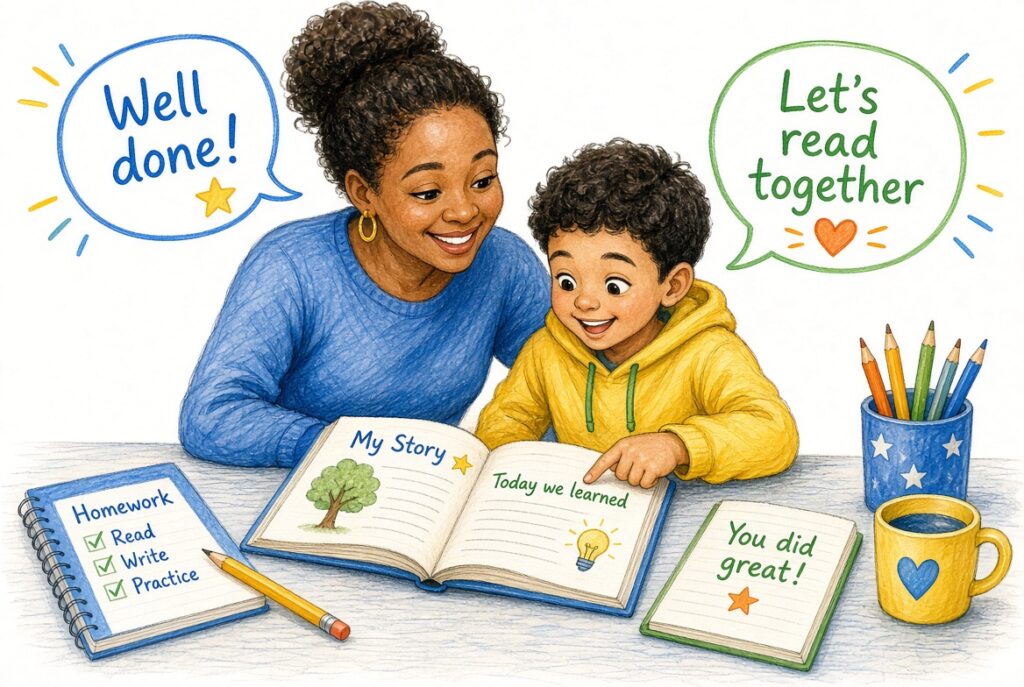
Many parents feel worried: “My English is not good. How can I help my child with homework?”
You can help – even if your English is limited. Here are simple, practical ways.
1. Create a quiet homework time. Choose a regular time and a quiet place. Turn off the TV and put phones away. This already helps a lot.
2. Ask your child to explain. Say: “Can you tell me what the teacher wants?” or “Show me what you need to do.” When children explain, they understand better themselves.
3. Use pictures and drawings. If you don’t know a word, draw it or look at pictures in the book together.
4. Check the school website or app. Many schools put homework online. Ask another parent or the teacher to show you how to use it once.
5. Learn a few useful phrases
- “What is your homework today?”
- “Do you need help?”
- “Let’s read it together.”
- “Well done!”
- “Try again.”
6. Read together – even a little. Look at picture books or short texts. Point to words. You don’t need to know every word.
7. Contact the teacher. Write a short message: “Hello. I want to help my child, but my English is limited. Can you give me simple advice?” Most teachers are happy to help.
8. Use free parent resources. You can find free English materials made especially for parents. These help you support your child’s learning even if your own English is still developing.
Remember: Showing interest and giving time is more important than perfect English. Your child will feel supported and loved.
Looking for free resources for parents? Visit ESOLish for simple, practical materials that help parents support their children’s English.